
 Nederlands
 Français
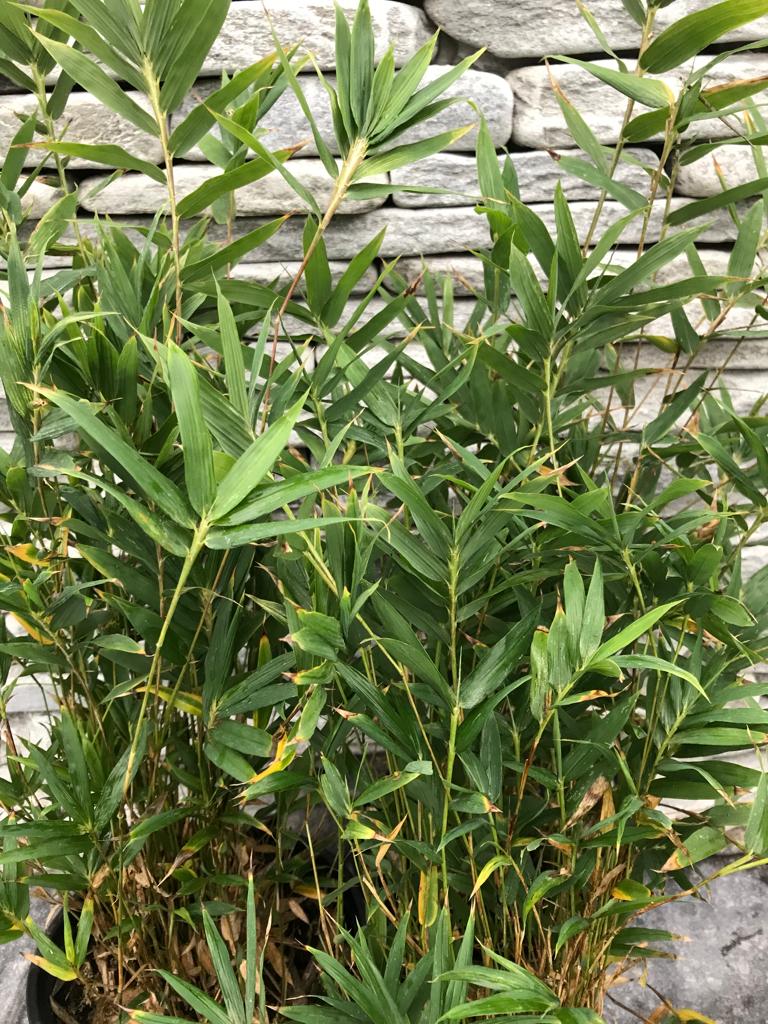
Pleioblastus Pygmaeus ‘Distichus’
Pleioblastus Pygmaeus ‘Distichus’
One of the smallest bamboos. The most noticeable characteristic of this bamboo is the very tough and erect leaf texture that very much look like little palm or fern leaves. Invasive, hardy.
Eventual size: 30-50 cm
Position:



RelatedProducts
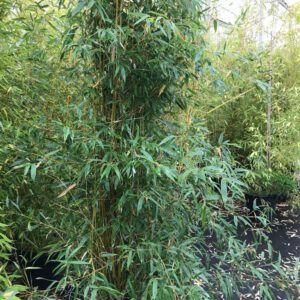
Phyllostachys Humilis
Phyllostachys Humilis
Very hardy and attractive bamboo with culms that emerge reddish brown, turn dark green then aging to orange-yellow in sun. It is one of the shortest members of the genus but also quite active at the roots, which means it can quickly establish a dense medium height evergreen screen or hedge. Invasive.
Eventual size: 4 to 5 m
Position:
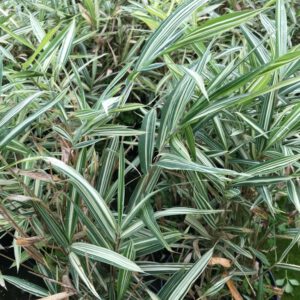
Pleioblastus fortunei ‘Variegata’
Pleioblastus fortunei ‘Variegata’
Low, tufted bamboo forming a slow-spreading colony to 1.2m high, the slender, pale green canes bearing narrow leaves to 20cm long, striped with creamy-white Invasive, hardy. Sun or part shade, moist well-drained soil.
Eventual size: 80 cm – 1 m
Position:
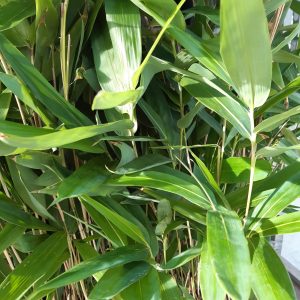
Sasa tsuboiana
Sasa tsuboiana
This Japanese bamboo has large dark green leaves and is an excellent choice for a mid-sized hedge. Does best in an area that gets some afternoon shade. Fairly fast spreading, uniform foliage. Protect from cold drying winds.
Eventual size: 1 to 1.5 m
Position:

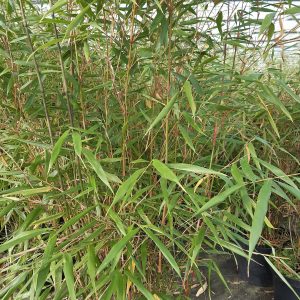
Fargesia scabrida ‘Asian Wonder’
Fargesia scabrida ‘Asian Wonder”
Beautiful clump forming bamboo with rusty-orange culm sheaths and reddish stems turning to green in the summer. Happy in most soils and situations. Non-invasive. Hardy, evergreen.
Eventual size: 3,5 to 4 m
Position:
Sasa palmata
Sasa palmata
Vigorous small bamboo forming a thicket of erect stems to 3 m high bearing dark green leaves to 40cm in length, the tips and margins turning pale brown in winter, giving a variegated. Invasive. Grow in fertile, humus-rich, moist but well-drained soil, best in partial shade. Protect from cold drying winds.
Eventual size: 3 m
Position: